Building a Layered Security Ecosystem: How Hospitals Are Rethinking Safety in the Age of AI and Analytics
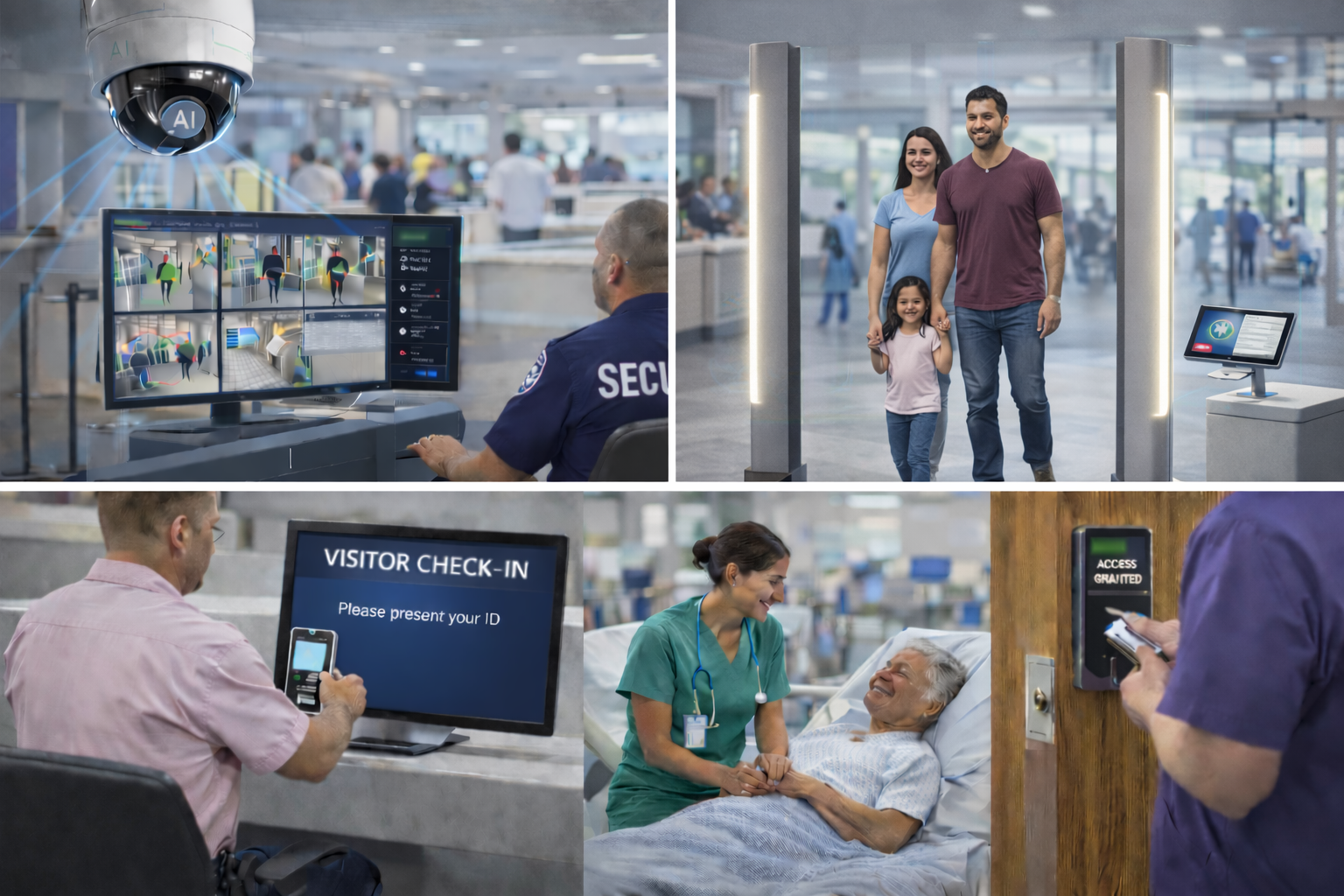
Layered security is becoming the operational standard for healthcare facilities that need to manage risk without disrupting care delivery. Hospital environments require open access for patients and visitors while maintaining strict safety controls. California Assembly Bill 2975 introduces new requirements for weapons detection at designated entrances, forcing leadership teams to rethink how security systems function together rather than in isolation.
No single system can address the full scope of risk. Cameras monitor activity, access control regulates movement, and visitor management documents who enters the facility. Each system produces data, but without integration, that data remains disconnected. A layered approach connects these systems into a coordinated ecosystem that supports real-time awareness and consistent response.
Entry points define the security baseline
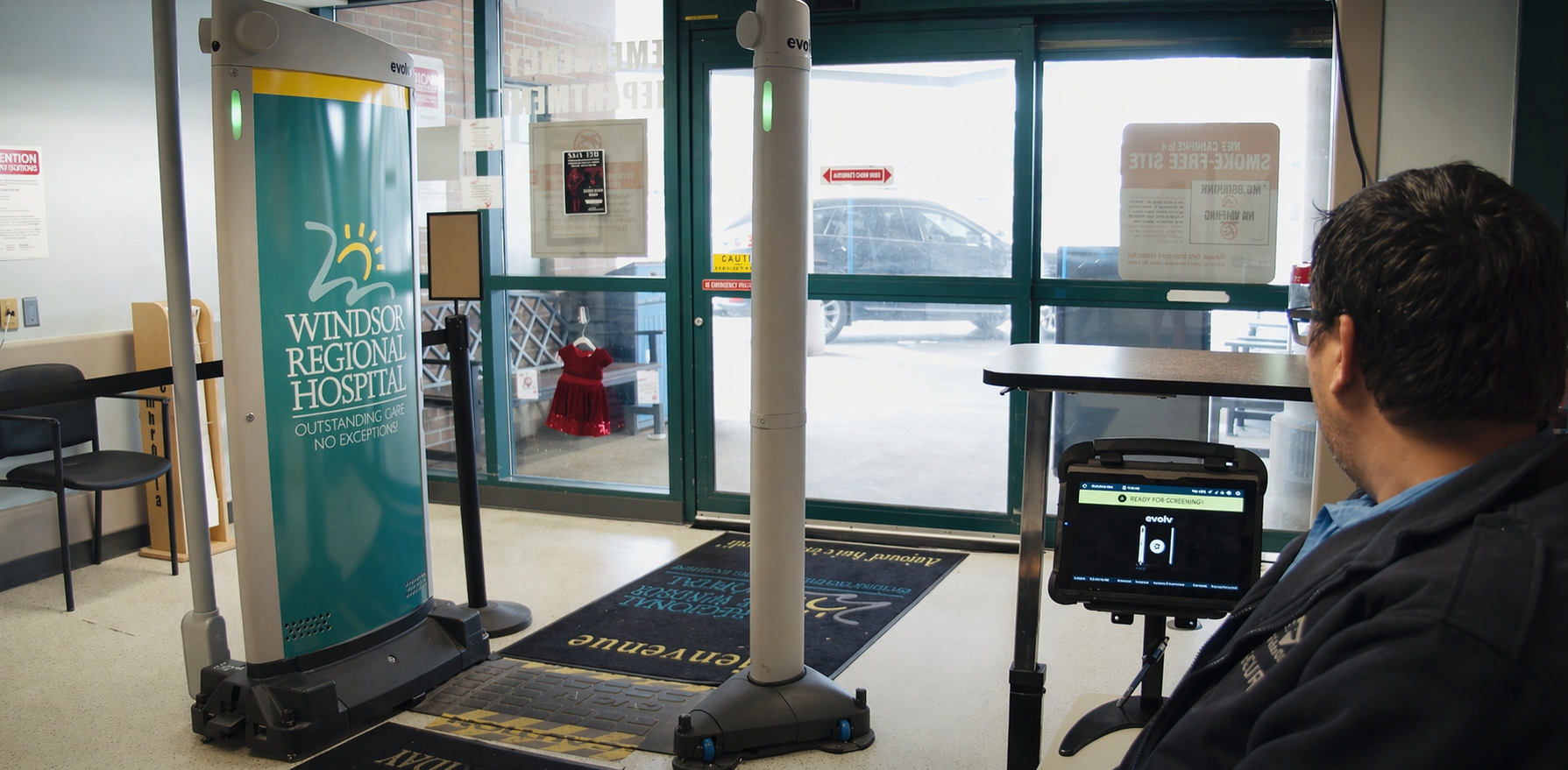
Hospital entrances concentrate the highest level of unpredictability. Visitors arrive under varying conditions, ranging from routine appointments to urgent care situations. Screening protocols must allow immediate access for clinical needs while enforcing security requirements outlined in AB 2975. The law requires weapons detection at main entrances, emergency departments, and labor and delivery access points when separate entrances exist.
Visitor management systems establish a layer of control. Digital registration captures identity, visit purpose, and destination within the facility. Badge issuance links individuals to specific timeframes and locations. This data becomes valuable when connected to screening systems, enabling detection events to be tied to verified identities instead of anonymous traffic.
Weapons detection introduces another layer that directly affects throughput. Detection systems must balance sensitivity and efficiency. High false-positive rates increase secondary screening volume and staffing requirements. Low sensitivity introduces risk exposure. System selection must consider throughput capacity, detection accuracy, and physical space constraints.
AI weapons detection and analytical support
AI contributes to the ecosystem through video analytics and detection support systems. Machine learning models embedded in cameras or video platforms classify objects, detect anomalies, and support event indexing. These models operate within defined parameters based on training datasets and configuration.
AI-assisted weapons detection systems combine sensor data with classification algorithms to identify potential threats. Performance depends on calibration, environmental factors, and operator input. Continuous refinement occurs as facilities adjust thresholds and validate detection outcomes against real conditions.
Video analytics expands situational awareness. Video solutions equipped with machine learning can identify behaviors such as loitering near entrances, unusual movement patterns, or access attempts outside expected timeframes. Natural language search tools allow security teams to locate relevant footage quickly, reducing investigation time.
Data accuracy remains critical. Misclassification of events, such as incorrectly identifying a permitted item as a threat, affects reporting and operational decisions. Governance processes must ensure consistent data input and regular validation.
For hospital administrators, this level of visibility translates into measurable control over risk, staffing, and compliance. Security teams spend less time reviewing footage and responding to false alarms, while leadership gains defensible data for incident reporting, regulatory requirements, and capital planning decisions.
Connecting systems into a security ecosystem
A layered security ecosystem requires interoperability. Visitor management, weapons detection, surveillance, and access control must exchange data through integrated platforms. This connection enables security teams to correlate events across systems.
For example, a detection alert can link to visitor registration data, corresponding video footage, and an incident record. This level of context improves response accuracy and reduces investigation time.
System architecture must support reliability and scalability. Cloud-based platforms offer centralized data access, while on-premise systems support low-latency operations. Hybrid models often provide the flexibility required in healthcare environments.
Planning for AB 2975 within a layered strategy
Compliance with AB 2975 requires structured planning. Risk assessments identify screening locations and traffic patterns. Technology evaluations compare throughput, accuracy, and operational impact. Budget planning must account for both equipment and staffing.
Pilot programs deliver measurable insight. Temporary deployments allow facilities to test workflows, evaluate detection performance, and refine staffing models. Data collected during pilots informs final implementation decisions.
Training must align with operational needs. Security personnel require instruction on system operation, response protocols, and accurate event classification. Consistent training supports reliable data and effective response.

Layered security as a strategic framework
Layered security provides a structured framework for managing risk across healthcare environments. Integrated systems enable hospitals to connect data, improve response times, and maintain operational continuity. AB 2975 accelerates this shift by requiring alignment between technology, staffing, and workflow design.
Hospitals that adopt layered security as a coordinated strategy gain greater visibility into operations and create environments that support both safety and care delivery.
Do you need a pulse point on your security and compliance? Connect with TRL Systems at trlsystems.com/solutions-healthcare for an assessment of your current infrastructure.