The Future of Care Is Here: Why Virtual Care Is Transforming Patient Experience
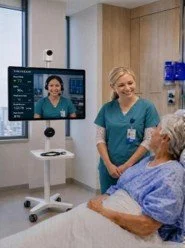
Virtual care extends clinical expertise beyond the bedside, creating more connected and responsive patient experiences.
Healthcare is experiencing one of the most significant transformations in its history. As patient expectations evolve and technology continues to advance, virtual care is no longer simply a convenience. It has become a strategic imperative for healthcare organizations seeking to improve access, enhance patient engagement, support caregivers, and drive better outcomes.
At TRL Systems, we believe technology is most powerful when it strengthens human connections rather than replacing them. Virtual care solutions are helping healthcare organizations extend clinical expertise beyond traditional care settings, ensuring that patients receive timely, personalized support wherever they are.
The future of healthcare is not about choosing between virtual and in-person care. It is about creating seamless experiences that integrate both.
Meeting Patients Where They Are
Today's patients expect healthcare to be accessible, convenient, and responsive. Whether managing a chronic condition, recovering from hospitalization, or seeking specialist consultation, patients increasingly value the flexibility virtual care provides.
Virtual care helps eliminate many of the barriers that have traditionally limited access to healthcare:
- Transportation challenges
- Geographic distance from providers
- Time away from work or family commitments
- Mobility limitations
- Delayed access to specialty care
By bringing clinical support directly into patients' homes and care environments, organizations can improve engagement while reducing unnecessary burden on patients and families.
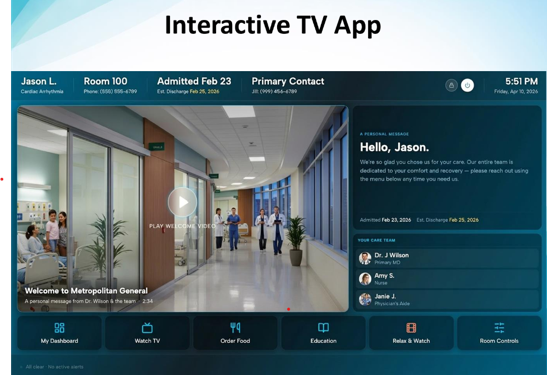
Patient engagement technology helps healthcare organizations connect with patients across every stage of the care journey. The in-room TV becomes the Education Portal, Communication Board and can link patients and care givers directly to a Virtual Nurse.
Virtual care also empowers patients to become active participants in their own healthcare experience. Digital engagement tools provide opportunities for education, communication, and real-time access to care teams, helping patients feel more informed and connected throughout their healthcare journey.
Enhancing the Clinical Experience
While much of the conversation around virtual care centers on technology, the true value lies in supporting clinicians and enabling them to deliver more effective, efficient ca
When thoughtfully implemented, virtual care allows healthcare teams to:
- Conduct timely admissions, discharges and education
- Monitor patients remotely
- Support virtual nursing initiatives & support new nurses on the spot
- Collaborate across multidisciplinary teams
- Identify risks sooner
- Improve continuity of care and handoffs
These capabilities help shift healthcare from a reactive model toward a more proactive and preventative approach.
As healthcare organizations continue to address workforce challenges, virtual care also provides innovative ways to extend nursing expertise, reduce administrative burden, and enhance communication among care teams.
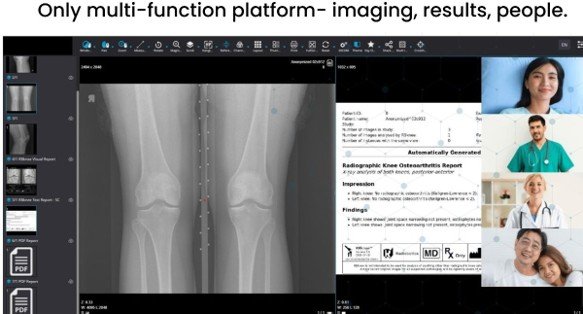
Virtual care technology enables collaboration, monitoring, communication, and clinical support across the continuum of care. Physicians, social services, nurses and family can now all be at the bedside.
Advancing Health Equity Through Technology
One of the most promising aspects of virtual care is its potential to improve health equity.
Patients in rural communities, underserved populations, and individuals facing transportation or mobility challenges can gain greater access to healthcare services through virtual care programs.
However, successful virtual care strategies require more than technology deployment. Healthcare leaders must also address:
- Digital literacy
- Language accessibility
- Internet connectivity
- Inclusive platform design
- Alternative pathways for vulnerable populations
Technology should serve as a bridge, not a barrier. Healthcare organizations that prioritize inclusivity will be best positioned to realize the full value of virtual care.
A New Era of Virtual Nursing
Virtual nursing is rapidly emerging as one of healthcare's most impactful innovations.
By leveraging integrated audiovisual technologies, remote clinical support, and digital communication platforms, organizations can enhance care delivery while supporting nursing staff at the bedside.
Virtual nurses can assist with:
- Patient admissions
- Discharge education
- Medication teaching
- Family communication
- Care coordination
- Documentation support
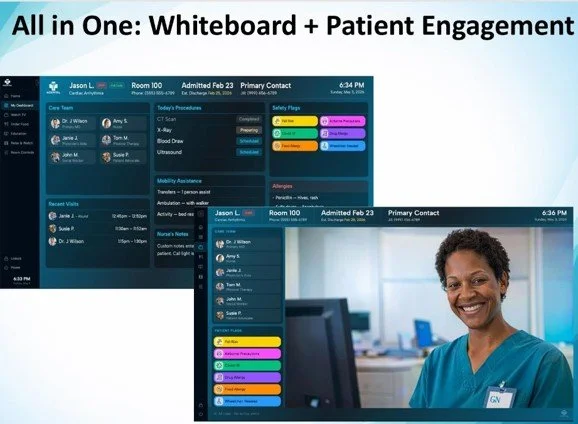
This approach allows bedside nurses to spend more time focused on direct patient care while ensuring patients continue to receive high-quality education, communication, and support.
Integrated patient room technology enhances communication, education, care coordination, and virtual nursing workflows.
As healthcare leaders seek solutions to workforce shortages and increasing patient complexity, virtual nursing has become a powerful strategy for improving both patient and caregiver experiences.
The Importance of Strategic Partnerships
Successful virtual care transformation requires more than implementing technology. It requires clinical expertise, workflow design, stakeholder engagement, adoption planning, and long-term partnership.
Healthcare organizations must evaluate solutions that support:
- Workflow integration
- Electronic health record interoperability
- Cybersecurity and privacy
- Scalability
- User adoption
- Measurable outcomes
Technology should simplify care delivery rather than create additional complexity.
At TRL Systems, we partner with healthcare organizations to design, implement, and optimize virtual care environments that align technology with clinical workflows and organizational goals.
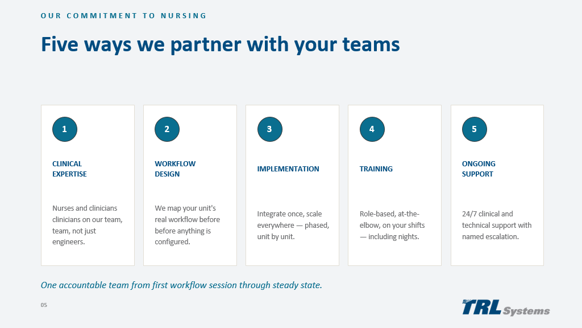
Successful technology implementations require throughfall consideration. TRL partners with hospitals and healthcare settings by providing clinical expertise, workflow optimization, education, and long-term support.
Looking Ahead
The future of healthcare will be defined by connected, patient-centered experiences that seamlessly integrate virtual and in-person care.
Healthcare leaders have an unprecedented opportunity to reimagine how care is delivered, improving access, outcomes, workforce sustainability, and patient satisfaction simultaneously.
The organizations that succeed will be those that view virtual care not as a technology initiative, but as a care transformation strategy.
At TRL Systems, we are proud to partner with healthcare organizations on this journey, helping create experiences that are more accessible, more connected, and more human. Virtual care is not simply changing where healthcare happens. It is redefining how healthcare is experienced.