How To Increase Your Security IQ: Preparing Officers for Modern Hospital Screening
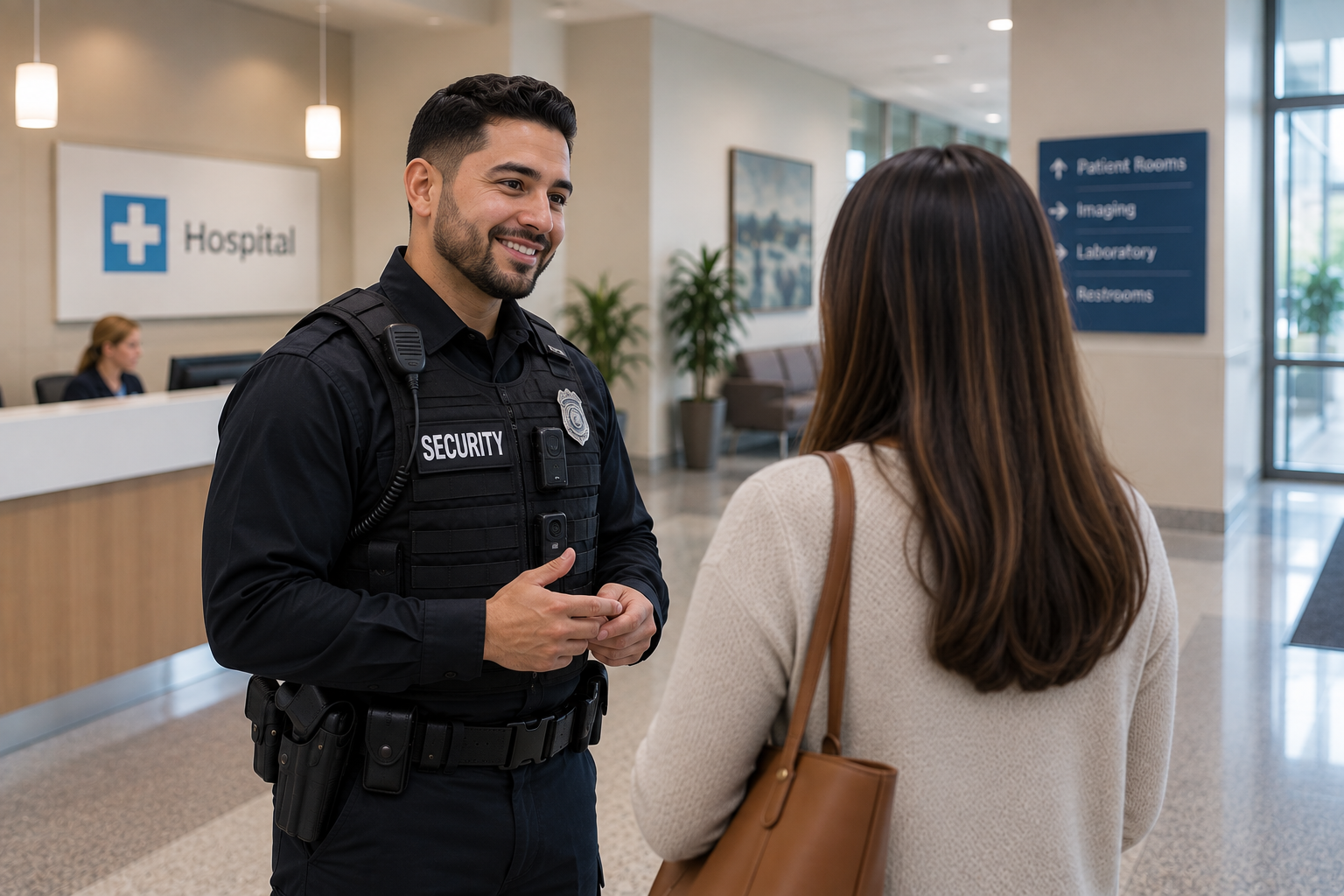
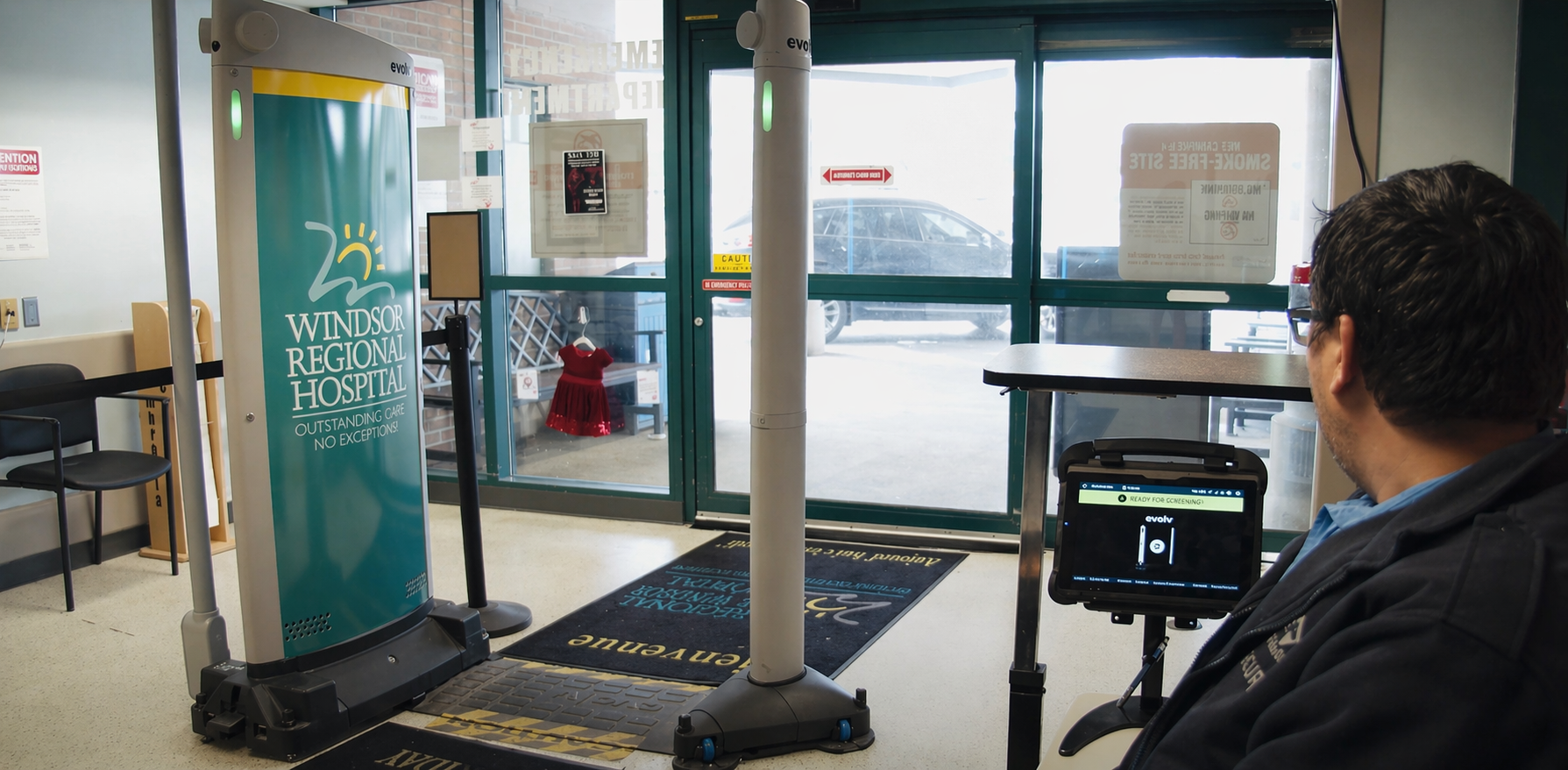
Hospital security screening technology can identify an object that requires attention. It cannot decide how an officer should approach a visitor, conduct secondary screening, resolve an alert, document the event, or determine whether escalation is appropriate. Those decisions make officer preparation a central component of modern hospital screening, particularly as California hospitals prepare for new requirements under Assembly Bill (AB) 2975.
Healthcare administrators need to think beyond equipment deployment. Increasing an organization’s security IQ requires connecting screening technology with officer education, documented procedures, supervision, and consistent execution.
How screening technology changes the officer’s job
Modern security screening creates a different operating environment than conventional checkpoint security. Officers may need to interpret system alerts while maintaining visitor throughput, determine when secondary screening is appropriate, communicate with people who may already be under significant stress, and resolve situations without unnecessarily disrupting access to care.
Those responsibilities require more than learning which buttons to push. Training should address checkpoint operations, alert resolution, secondary screening, behavioral threat assessment, visitor management, and the anatomy of a bag search.
Officers also need clear guidance for distinguishing an equipment alert from a verified prohibited item. That distinction affects incident documentation, reporting accuracy, and subsequent analysis of screening performance.
Consider an off-duty law enforcement officer carrying an authorized firearm versus a visitor carrying a prohibited weapon. A detection system may identify an object requiring resolution, but trained personnel must apply facility policy, verify the circumstances, and classify the outcome correctly.
Why consistency is a system-level requirement
Hospital screening programs can become inconsistent quickly when individual officers learn through observation or informal coaching. One officer may approach secondary screening differently from another. Separate facilities within the same healthcare system may interpret procedures differently. Supervisors may have limited visibility into whether required education has been completed.
Standardized, role-based education establishes a common operating baseline. Security Screening IQ™ (SSIQ) is designed specifically for healthcare workforce education and compliance management. Recommended learning paths distinguish among frontline officers, supervisors, clinical employees, and other personnel because their responsibilities differ.
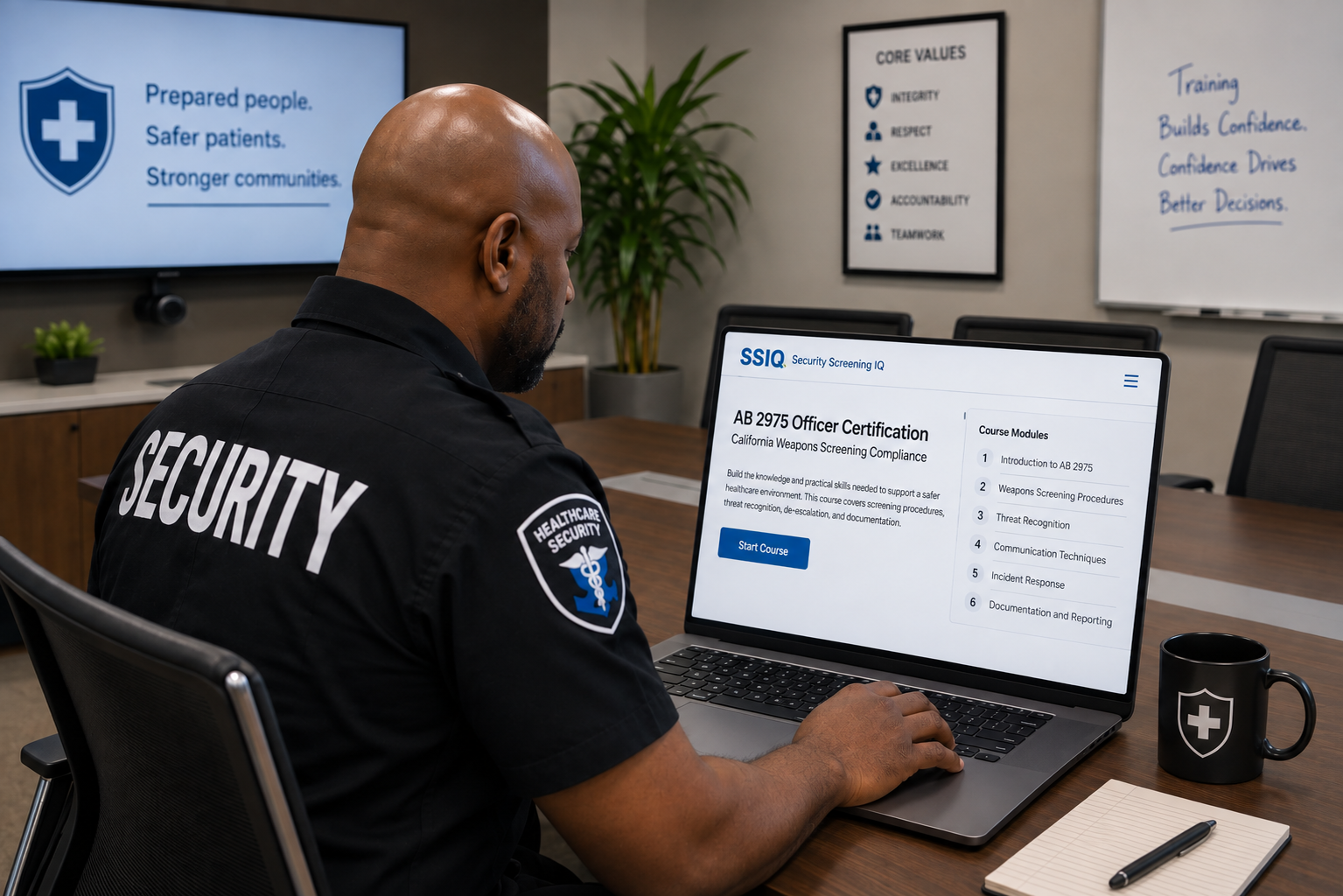
For example, SSIQ’s SSC:9.3™ Secondary Security Screening curriculum addresses checkpoint operations, secondary screening, behavioral threat assessment, visitor management, and bag searches for frontline officers. Supervisor education extends into compliance oversight, quality assurance, and incident documentation.
This structure recognizes a practical reality: officers execute the screening process, while supervisors are responsible for determining whether that process remains consistent across shifts, personnel, and facilities.
Why documentation deserves the same attention as instruction
Training that cannot be verified creates another problem for healthcare leadership. Hospitals may need to determine who completed a particular course, which employees require recertification, whether multiple facilities are following the same educational requirements, and whether documentation can be produced during an inspection or internal review.
SSIQ centralizes certification status, completion tracking, recertification reminders, and compliance documentation through dashboards and reporting tools. Multi-facility visibility also allows health systems to review readiness across departments and locations rather than maintaining separate spreadsheets or local records.
The administrative benefit extends beyond preparing documentation. Leadership can identify training gaps before they become operational gaps.
Officer preparation should account for the patient experience
A hospital entrance differs fundamentally from an airport or courthouse checkpoint. Someone entering may be injured, frightened, cognitively impaired, accompanying a critically ill family member, or attempting to reach emergency care. Screening procedures must account for those conditions.
Officer education should include de-escalation, patient rights, threat recognition, and respectful interaction alongside technical screening competencies. A technically correct screening process can still create unnecessary conflict when communication or secondary screening procedures are poorly handled. Healthcare-focused education gives officers context for applying security procedures without losing sight of the environment where those procedures occur.
Developing the human skills behind hospital screening
Hospitals preparing for AB 2975 should consider officer education alongside technology selection, entrance design, staffing, policies, and secondary screening workflows. Waiting until installation to address education leaves little opportunity to test how officers will handle real scenarios.
Scenario-based training can expose unclear escalation procedures, inconsistent search techniques, documentation gaps, and supervisory questions before those weaknesses reach an active entrance. That preparation also raises the organization’s security IQ beyond individual certification. Leadership gains a clearer view of whether personnel, policy, technology, and oversight are functioning as one screening program.
Is your hospital preparing officers for real checkpoint decisions or simply teaching them how to operate the equipment? Discover how to develop the judgment and screening skills that technology alone cannot provide at trlsystems.com/solutions-healthcare. Systems detect. Humans decide. Training determines outcomes.