How AI and Analytics Are Closing Healthcare Security Gaps
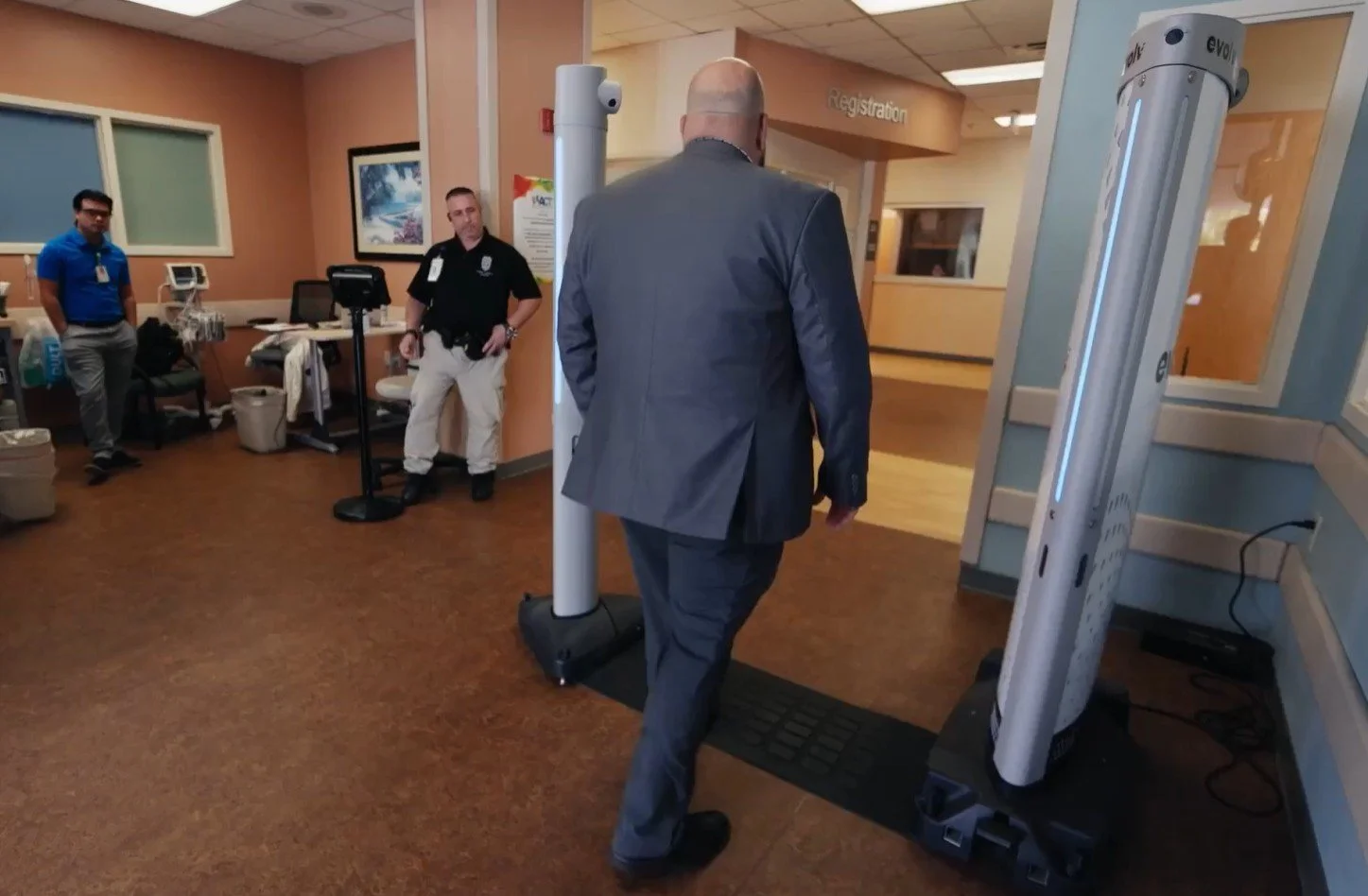
Most hospitals already use badge access systems, surveillance cameras, and visitor check-in kiosks. These tools are common. What’s less common is integration. Security infrastructure in many facilities still runs in isolation. Cameras don’t inform access control. Incident reports never feed into analytics. Staff respond after something happens, not before.
Healthcare security doesn’t need more tools. It needs smarter coordination between the tools hospitals already have. That’s where AI begins to change the equation.
Smarter surveillance
Motion detection has been a standard feature in video surveillance for decades. But motion alone isn’t informative. That’s why machine learning-based video systems are entering hospitals — not to replace human decision-making, but to support it with structured pattern recognition.
Machine learning models, trained on large volumes of hospital-specific video, can categorize behavior into predefined classes.
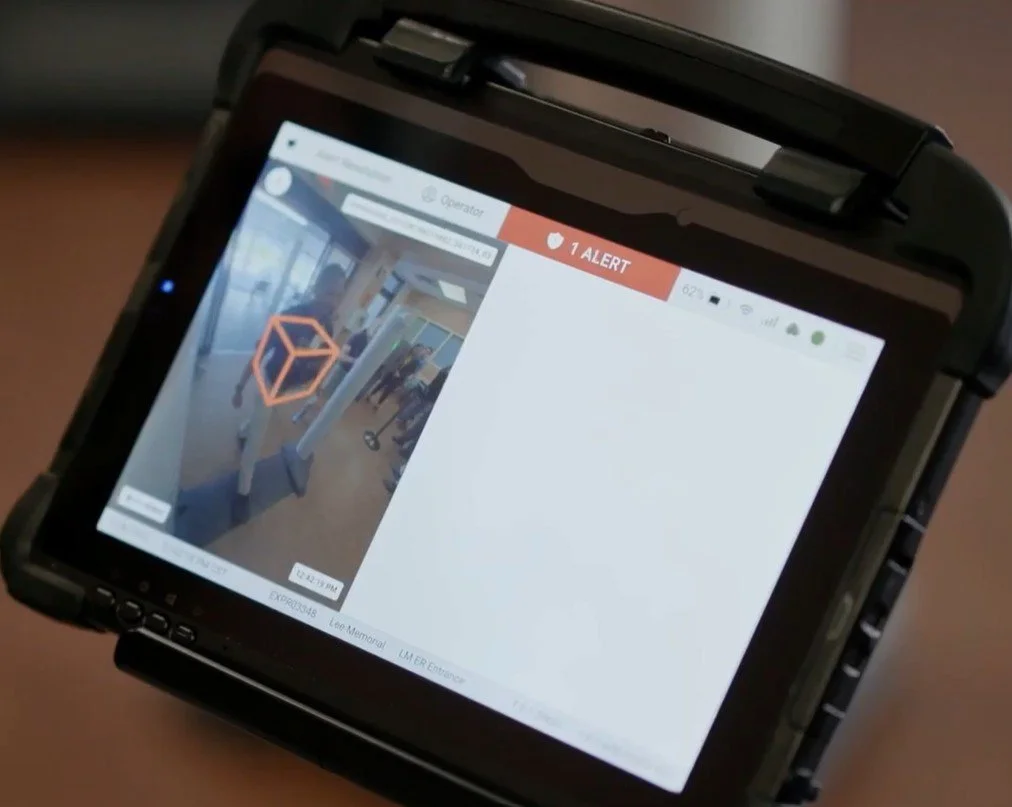
For example, if a vehicle is parked near the main entrance during lockdown hours or a person is loitering near a loading dock, the system can flag that deviation based on camera data and time-of-day logic. Some AI and analytics-enhanced systems also use object classification to identify items such as unattended bags or abandoned carts, assigning priority levels to certain object types.
These tools do not make decisions. They provide context. Security professionals still determine appropriate responses. But the difference is timing: alerts now surface based on behavior profiles, not just binary movement.
Searchable video
Another area where AI is making a measurable impact is in natural language search of security video. Instead of manually scrubbing hours of footage, staff can type queries such as “person enters ICU without badge scan” or “unattended object left near pharmacy.” These queries use AI-powered video indexing to return clips matching defined behaviors.
This reduces investigative time from hours to minutes because the system was programmed to recognize visual inputs and associate them with rule-based categories. When integrated properly, these AI and analytics-enhanced systems help close the loop on elopement incidents, badge tailgating, access violations, loitering near restricted entrances, and after-hours activity in sensitive zones.
Automated workflows with human control
Some hospital systems use rules-based alerting platforms to automate emergency protocols. For instance, a duress button pressed in a nurse station may trigger immediate lockdown of adjacent corridors, pre-recorded PA announcements, or alert messaging to designated responders.
These systems may use data for decision trees, but they are not learning from historical incidents. They require humans to input correct categories (e.g., “permitted weapon” vs. “unauthorized weapon”) if accurate reporting is expected. Mislabeling in the moment can distort data and lead to incorrect assumptions about the frequency and severity of threats.
That’s why human judgment remains a central part of hospital safety — and why training, process design, and governance of AI inputs matter more than the marketing hype behind the technology.
Safe practice with AI in healthcare security
Hospitals face increasing pressure to modernize without risking patient trust or safety. When introduced responsibly, AI supports this effort. But safe practice means understanding what AI is and what it isn’t.
AI is not fully autonomous. It doesn’t replace teams or make final decisions. It is dependent on data quality and coverage. If historical data lacks diversity, output may reflect that. AI tools can categorize and compare, but they don’t understand intent.
Safe AI deployment in healthcare security includes clear classification rules verified by human oversight, transparent thresholds for alert escalation, and feedback loops that allow system refinement over time. Any vendor that describes AI as a “black box” solution without rules-based logic or human validation is misrepresenting the technology.
Why bias matters
Bias in AI often results from insufficient data, especially for underrepresented populations or rare events. In hospitals, this shows up in both clinical and security contexts.
For example, patients who avoid traditional healthcare settings may not appear in enough training data to model normal movement behavior. Weapons detection systems that rely on manual input may misclassify events if operators do not distinguish between permitted and non-permitted carry (e.g., off-duty officers vs. visitors with no carry rights). Sound-event analytics may trigger alerts more frequently on certain tones of voice or accent types if the audio data was not diverse enough during training.
Bias doesn’t only come from algorithms. Human input errors — incorrect labeling, overgeneralization, or neglecting edge cases — can pollute models and degrade trust.
Healthcare facilities evaluating AI tools must ask: Where does the data come from? How often is it updated? Can we correct for manual errors later in the process?

Turning security tools into real-time insight
Healthcare security teams already rely on a wide array of devices, from access control and surveillance to incident alerting and emergency protocols. The challenge isn’t tool availability. It’s insight.
AI helps transform security infrastructure into a smarter, more responsive ecosystem. It enables hospitals to correlate behavior across systems, identify anomalies faster, and minimize noise through meaningful, contextual alerts.
But success with AI depends on how well these tools are implemented, governed, and continuously refined. That includes validating inputs, reducing false positives, accounting for bias, and ensuring human oversight remains central to every response.
AI isn’t a replacement. It’s an accelerator for better coordination, faster incident response, and a safer clinical environment. Hospitals that use it intentionally can gain a critical edge in managing risk without increasing complexity.
Are fragmented or outdated systems leaving your hospital vulnerable? Contact the experts at trlsystems.com/solutions-healthcare to discuss integrating AI into your facility.