From Certification To Compliance: Modernizing Hospital Security Officer Training
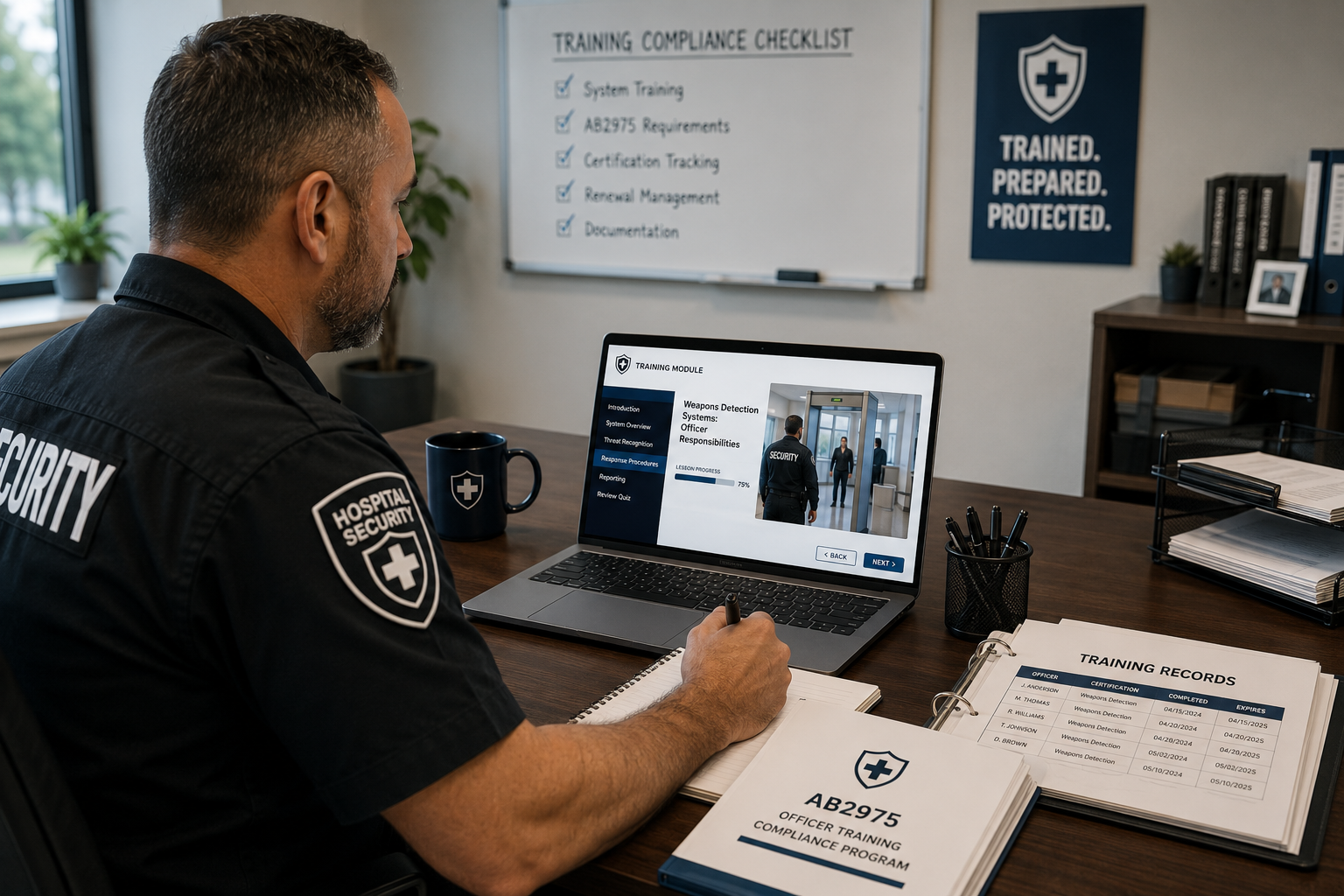
California's Assembly Bill (AB) 2975 introduces new expectations for hospital safety by requiring weapons detection screening at designated entrances. Technology represents only one part of compliance. Hospital security officer training carries equal weight because even the most advanced screening system depends on personnel who understand how to operate equipment, respond appropriately to alarms, communicate with visitors, and document incidents consistently.
Hospitals preparing for compliance face a practical challenge. Training must remain current across multiple shifts, new hires, contractor personnel, and recertification requirements. Managing that process with spreadsheets and manual reminders quickly becomes difficult as security programs expand.
Why training must include more than equipment operation
Weapons detection systems produce alerts. Security officers determine what happens next. An officer must understand alarm resolution procedures, secondary screening protocols, de-escalation techniques, visitor communication, chain-of-custody procedures when prohibited items are discovered, and coordination with clinical staff and local law enforcement. Every decision influences patient flow, visitor experience, and staff safety.
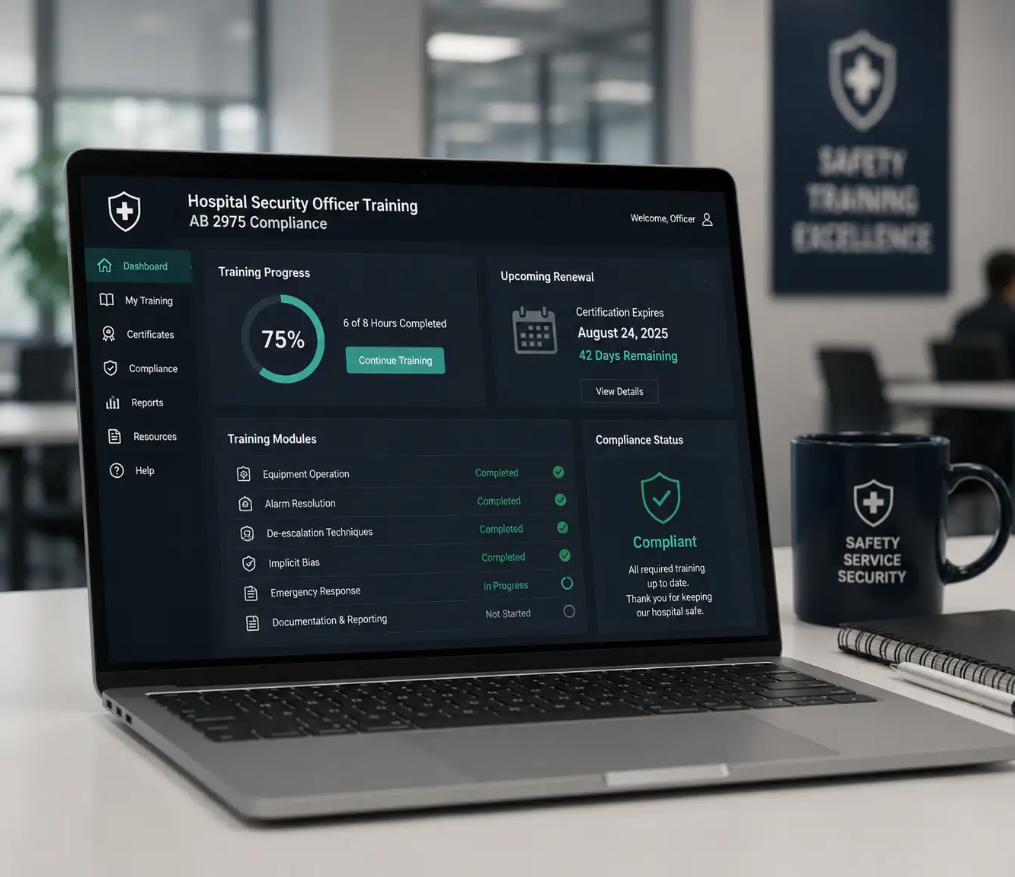
AB 2975 requires security personnel operating weapons detection systems to complete eight hours of specialized training covering equipment operation, de-escalation techniques, implicit bias, and emergency response. Consistent instruction helps ensure those procedures are applied uniformly regardless of shift, facility, or personnel turnover.
Training also reduces unnecessary variability. Two officers responding differently to identical screening events introduce operational inconsistency that can increase liability while creating confusion for patients and visitors.
Why compliance requires continuous visibility
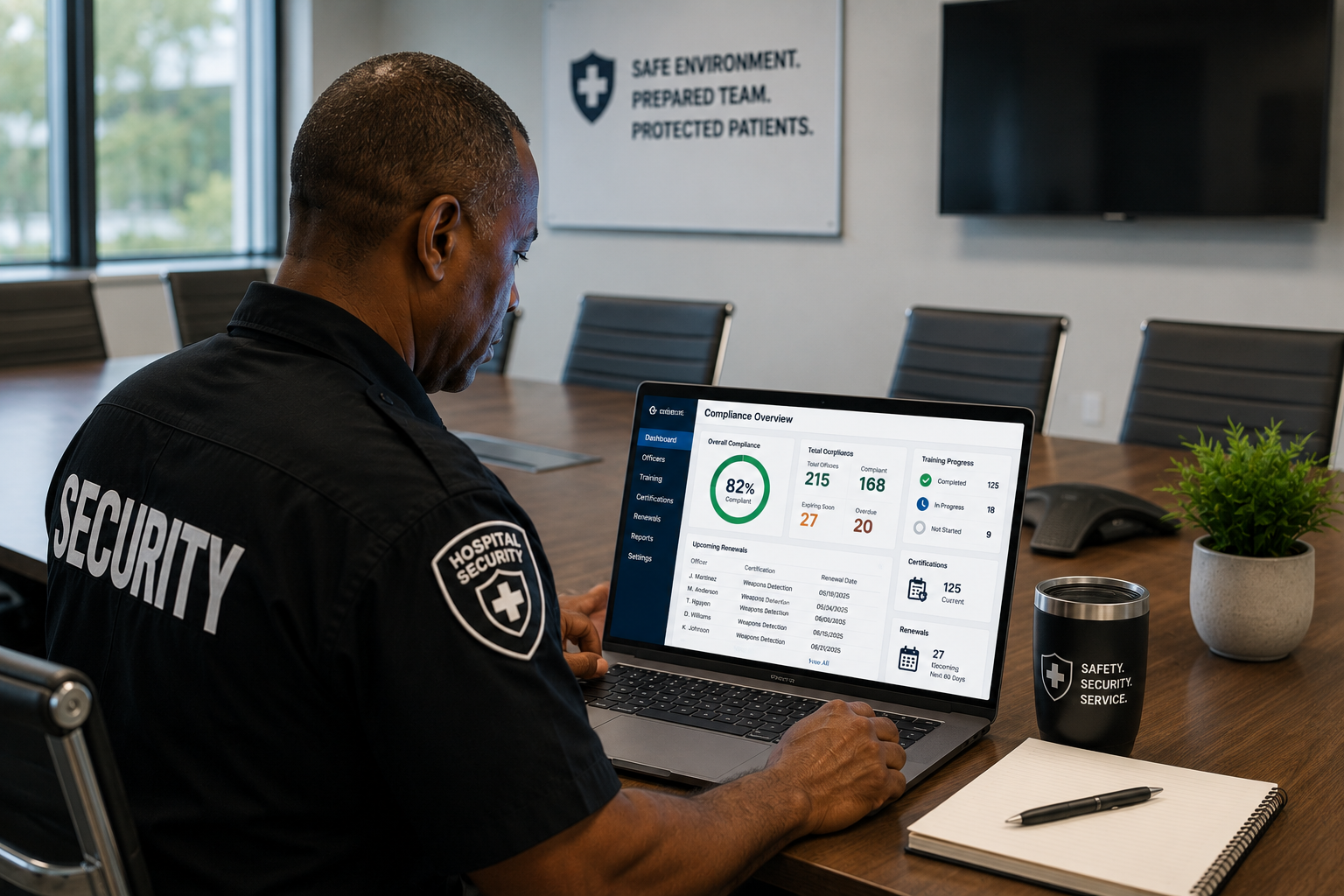
Completing an initial certification represents only the beginning. Hospitals must maintain documentation showing which officers completed the required training, when certifications expire, and whether refresher education has been completed. Staff turnover, schedule changes, and contractor rotation create moving targets for security leadership.
Manual tracking systems often struggle to provide real-time visibility across large security teams. A centralized management platform gives supervisors immediate access to certification status, upcoming renewals, course completion history, and compliance reporting. Administrators no longer need to search multiple spreadsheets or paper records before an inspection or accreditation review.
Visibility also supports workforce planning. Supervisors can identify expiring certifications before staffing schedules are affected rather than discovering compliance gaps after assignments have already been made.
How self-paced learning supports operational demands
Hospital security departments rarely have the flexibility to remove multiple officers from duty for classroom instruction. Self-paced online learning allows officers to complete required education while accommodating rotating schedules, overnight shifts, and varying staffing levels. Standardized course content also improves instructional consistency across multiple facilities within a health system.
Learning platforms designed specifically for healthcare security can incorporate assessments that verify knowledge retention rather than simply recording course completion. That distinction becomes valuable when officers encounter unfamiliar situations requiring judgment under pressure.
Security leaders also gain the ability to onboard new personnel more efficiently without waiting for scheduled classroom sessions.
How to turn training into an operational program
Compliance becomes easier when education, documentation, and reporting operate together. Comprehensive Security Screening Measures (CSSM) provides an online, self-paced training program supported by a centralized management platform. Supervisors can monitor certification status, identify upcoming renewal deadlines, generate compliance reports, and maintain documentation from a single location.
Centralized oversight also creates measurable accountability. Leadership can quickly identify overdue training, verify compliance before assigning officers to screening responsibilities, and demonstrate ongoing program management during regulatory reviews. The technology transforms training from an annual administrative task into a continuously managed operational process.
Why preparing for AB 2975 should start now
California hospitals have limited time to prepare for the final implementation of AB 2975. Organizations that begin planning early gain the opportunity to evaluate workflows, select appropriate weapons detection technologies, establish screening procedures, and implement officer training before compliance deadlines approach.
Early preparation also reduces implementation pressure. Officers become familiar with equipment and procedures before screening programs become mandatory, allowing hospitals to refine operations through practice rather than during active deployment.
How to build a sustainable compliance program
Hospital security officer training should provide more than documented course completion. It should establish consistent operating procedures, strengthen accountability, and give leadership continuous visibility into workforce readiness. Hospitals that modernize training management alongside weapons detection deployment will be better positioned to demonstrate compliance while creating safer, more predictable screening operations for patients, visitors, and staff.
Is your hospital prepared to manage security officer training under AB 2975? Connect with TRL Systems to learn how centralized training and compliance management can simplify implementation at trlsystems.com/solutions-healthcare.